
China said that after this incident both sides are in communication and coordination on the matter through diplomatic and military channels.
Singh said a meeting between senior Indian and Chinese military leaders has been scheduled for June 6 even as he asserted that India is not going to back off from its position. Asked about the current situation in sensitive areas in eastern Ladakh, he said Chinese have come up to what they claim is their territory while Indians believed it is theirs.
The Indian Army will continue to maintain its aggressive posturing in all disputed areas in eastern Ladakh and will not back off till status quo is maintained, sources said.

India and China are trying to develop effective mechanisms to prevent the "embarrassing" face-offs between their troops along the "disputed" points of the Line of Actual Control, Defence Minister A K Antony said in New Delhi on Friday.

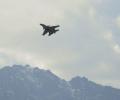
Women pilots will soon fly fighter jets of the Indian Air Force, Air Chief Marshal Arup Raha said on Thursday.
While the de-escalation process was underway, a violent face-off took place on Monday night between Indian and Chinese troops leading to the death of 20 Indian soldiers.
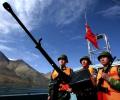
After making incursion bids in Ladakh through land route, Chinese troops have made several attempts to enter Indian waters at Pangong lake nestled in the higher reaches of Ladakh with the latest incident reported on Friday.
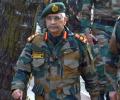
The commanders will also deliberate on the overall situation in Jammu and Kashmir besides delving into issues having national security implications, they said. However, the main focus will be on the situation in eastern Ladakh where Indian and Chinese troops are locked in an eyeball-to-eyeball face-off in Pangong Tso, Galwan Valley, Demchok and Daulat Beg Oldie, the sources said.
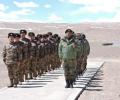
The US hopes that the differences will be resolved peacefully, officials said in Washington.

Senior officers recounted extreme Chinese brutality to the Indian prisoners, with some of them being pushed over cliffs and soldiers' bodies being recovered from the Galwan River.
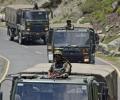
'The one aspect which no Indian military thinker would wish to see emerge is a LoC type of posture at the LAC.' 'The LoC is manned for 750 km and terrorist infiltration has led to the creation of a virtual fortress along its entire length.' 'Something mirroring this at the LAC is going to be expensive although deployment everywhere is not warranted there.' 'However, given the complete trust deficit, there appear few alternatives,' notes Lieutenant General Syed Ata Hasnain (retd).
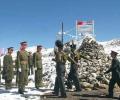
People familiar with the situation in the region said the two sides were engaged in trying to resolve the dispute, but there was no indication of a positive outcome yet as both the armies continued to bolster their positions in disputed areas of Pangong Tso and Galwan Valley and Demchok.
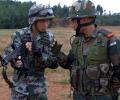
It is learnt that the India's top military brass is constantly monitoring the evolving situation even as the United States said the aggressive behaviour by Chinese troops was a reminder of the threat posed by China.

At the border personnel meeting, China also accused the Indian side of damaging its road building equipment when a road laying party left its gear in Tuting in December last year following a protest by India.
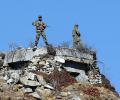
After heightened tension in Chumar area in Northeast Ladakh for four days, Chinese troops on Thursday night began withdrawing from the Indian territory, official sources said.

A US-made C-130J military transport plane, one of the most modern aircraft acquired recently by the Indian Air Force, crashed on Friday near Gwalior, killing all the five crew members, including four officers.

Amid a spate of incursions by China in Ladakh, its troops are also resorting to tactics like preventing the Indian army from patrolling posts in this sector along the border, which is well within India's territory.
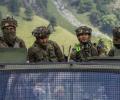
Today, the Ladakhis and Tibetans have been joined by the Sikhs, the Madrassis, the Garhwalis, the Rajputs, who are well trained psychologically and otherwise, to defend the nation, observes Claude Arpi.
'China would rather tie us down; and bleed us as much as it can so that we aren't able to lift our heads to face them.'
The Chinese side has particularly bolstered its presence in the Galwan Valley, erecting around 100 tents in the last two weeks and bringing in heavy equipment for construction of bunkers, notwithstanding the stiff protest by Indian troops. There have been reports of multiple incidents of transgressions by Chinese troops in several areas in Eastern Ladakh.
Both the Indian and Chinese armies have brought in more troops in sensitive locations like Demchok, Daulat Beg Oldie and areas around Galwan river as well as Pangong Tso lake in Ladakh, the sources said. The area around Galwan has been a point of friction between the two sides for over six decades.
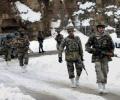
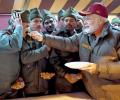
The DG of the ITBP said his troops have been provided with special winter clothing and nutritious food as they brave the severe chill in eastern Ladakh where the armies of India and China are locked in a tense standoff for over six months. He said 'strains in bilateral relations are already evident but we are confident these will be sorted out peacefully very shortly'.

Senior commanders of the two armies held intense negotiations for nearly 11 hours on Sunday at a designated meeting point in Moldo on the Chinese side of the Line of Actual Control.
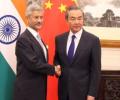
Wang said the two sides should follow the important consensus reached by the leaders of the two countries and strengthen the communication and coordination on the proper handling of the border situation through the existing channels so as to jointly maintain peace and tranquility in the border area, the Chinese foreign ministry said in a statement.

'The intentions are clear as day! Let India build the infrastructure, then they will claim the land and use the infrastructure to their benefit.' Air Commodore Nitin Sathe (retd) speaks to IAF veterans who have flown in the Galwan Valley long before it became today's headlines.
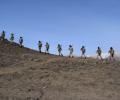
The MEA said it was the Chinese side that recently undertakook activities hindering India's normal patrols in the areas.

'If our troops on the frontlines were sleeping for two hours, they can perhaps now sleep for 2.5 hours because when the adversary is right in front, then you can't even blink your eyes, you have to be absolutely alert.'

The government must figure out what the Chinese game plan is and thwart the endgame before it is upon us, possibly in early winter, advises David Devadas.
'To deal with a bully, you have to deal from a position of strength, not a position of weakness.'
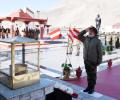
Lieutenant General Harinder Singh, who commands the 'Fire and Fury' 14 Corps, has the experience and talent to face down the Chinese challenge. The general is a rare combination of thinker and tough-minded doer, observes David Devadas.

'This was Indian land the PLA advanced on and occupied.' 'The Chinese then 'negotiated' a pullback of their troops a small distance on Indian territory even as Indian jawans draw back further into India from the forward position.' 'An apparently satisfied Indian government says this is a great move for peace! How great is that for China!'

India-China relations have always attracted Parliament's attention and there have always been useful and productive and constructive discussions how to engage with China, notes Rup Narayan Das.
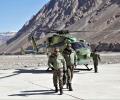
'This reluctance to respond forcefully to Chinese PLA provocations and outright aggression has as much to do with Prime Minister Modi personally, as with the institutional mindset of the MEA or even the Indian Army.' 'They are scarred by the 1962 War and are still cowed by China.'
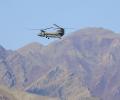
For both India and China, the most likely option -- and the most challenging -- appears to be a freezing of the status quo.
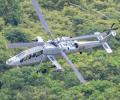
All of India welcomes the Light Combat Helicopter into the Armed Forces arsenal and wishes it a safe tenure and happy shooting. May it rule the skies and ensure that the enemies are given a fitting reply when the need arises.
'The BJP has done the Uri surgical strikes, handled the Dokalam crisis and the Balakot strikes.' 'So if there is a de-escalation only at the diplomatic level and not resolving this issue of a colonel being killed, then it translates into public anger.'

India's doctrinal policy shift in combating terror by carrying out the Balakot air strikes inside Pakistan, appointment of a Chief of Defence Staff and hastening work on military modernisation marked a new beginning in 2019 in dealing with complex security challenges.

'India in 2020 is a lot better prepared than in 1962.' 'It is no longer a pushover; and anything other than a crushing Chinese military victory will be a major loss of face for China,' observes Rajeev Srinivasan in the first of a three part column.
India brought in more troops after the destruction of two of its bunkers and "aggressive tactics" adopted by the Chinese People's Liberation Army

'All the government needs to do is to identify clear political and strategic objectives and to give the military planners a free hand,' asserts Ajai Shukla.
